 +86 18392991072





0102030405
High - Speed Transmission Connectors: A Key Driver for Industry Development
2025-09-29
In the wave of digitalization, data transmission rate has become crucial to the development of various industries. As a core component, high - speed transmission connectors are an important driving force for industrial progress.
Industry demand is experiencing explosive growth. With the development of technologies such as 5G, artificial intelligence, and cloud computing, data centers have an urgent need for ultra - high - speed transmission. For example, NVIDIA's GB200 super chip achieves interconnection between GPU and NVSwitch through high - speed copper cables, improving data processing efficiency. It is predicted that from 2024 to 2028, the global market for passive copper cables (DACs) and active cables (AECs) will grow at a compound annual rate of 25% and 45% respectively. The Chinese market is also growing rapidly. In 2024, the industrial scale of China's copper cable high - speed connectors reached 8.759 billion yuan, and it is expected to exceed 20 billion yuan by 2028.
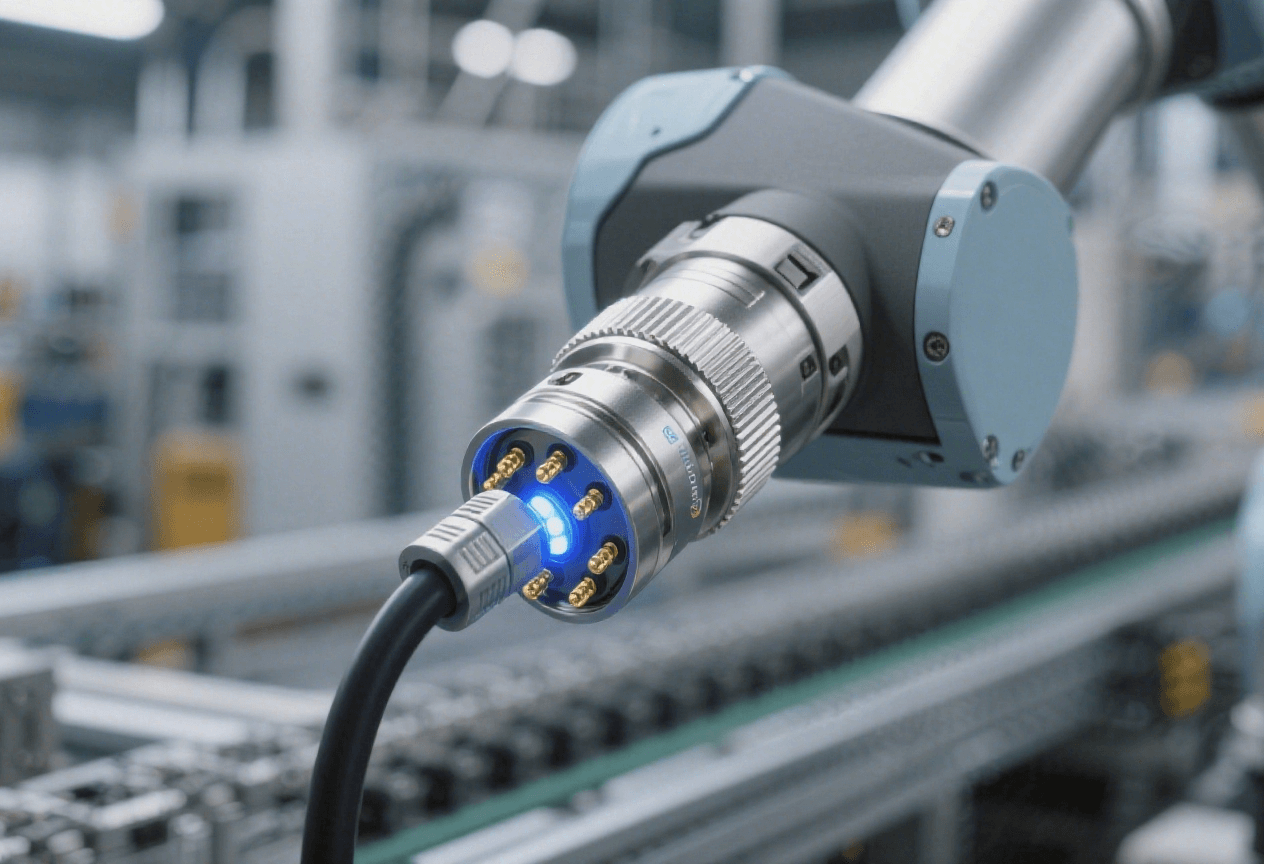
Technological breakthroughs are the core driving force for development. The transmission rate continues to rise, from low speeds to 112Gbps and even 224Gbps. Products with 224Gbps developed by enterprises such as Luxshare Precision have passed customer verification. Materials and processes are constantly innovated. High - speed copper cables have built - in chips to achieve signal regeneration, extending the transmission distance. Huawei's silicon photonics integrated connector has a transmission rate of 400Gbps and its power consumption is reduced by 50%.
The continuous expansion of application scenarios has injected vitality into the industry. In the intelligentization of automobiles, high - speed connectors are used in smart cockpits and autonomous driving systems to realize the transmission of sensor data and vehicle - to - network communication. 5G base stations rely on them to ensure the reliable transmission of radio frequency, baseband and other signals. There is also strong demand in fields such as consumer electronics and industrial automation.
Looking into the future, the industry will develop towards higher transmission rates, miniaturization and high density, integration of optical and copper technologies, and intelligence, so as to meet the needs of new applications, adapt to the trend of equipment integration, and optimize scenario adaptation and system reliability.